
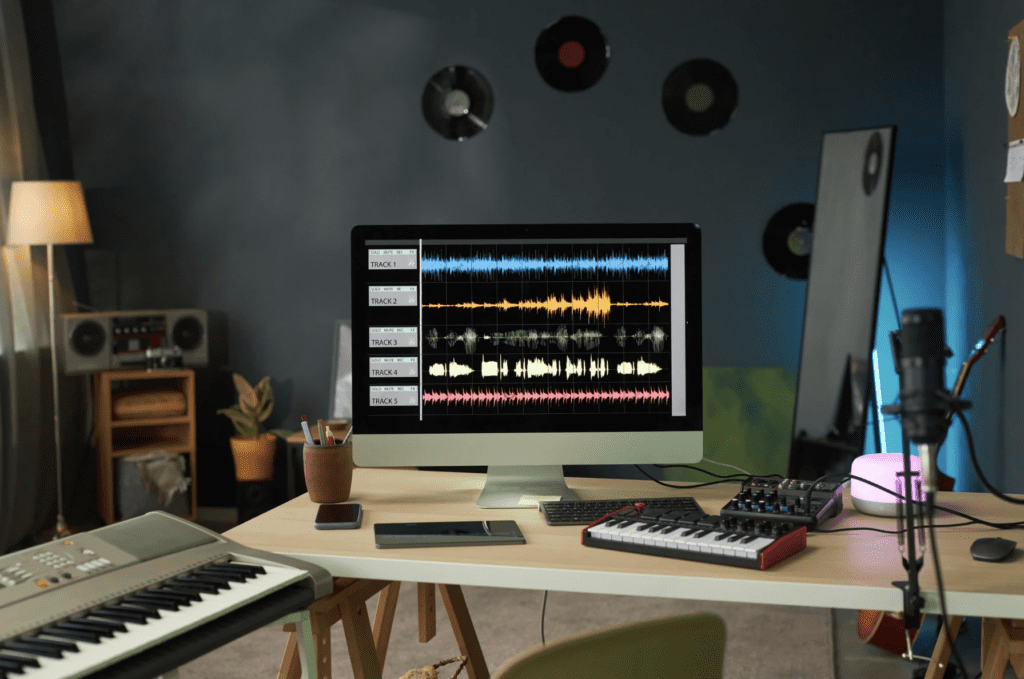
In the mid-twentieth century, the path to musical relevance was a gauntlet of physical and financial gatekeepers. To record a professional-sounding record, an artist needed a label, a high-interest loan disguised as an advance, and access to a million-dollar studio facility. These facilities—Abbey Road, Capitol Records, Motown’s Hitsville U.S.A.—were the cathedrals of sound, and the high priests were the engineers who alone understood the alchemy of tape and transistors.
Fast forward to the third decade of the 21st century, and the walls of these cathedrals have not just crumbled; they have been decentralized. The “struggling artist” trope is being replaced by the “independent creator” reality. We are currently witnessing a Digital Renaissance where the barrier to entry has dropped to the cost of a smartphone and an internet connection. At the epicenter of this shift is a platform that serves as part recording studio, part social network, and part global talent agency.
That platform is BandLab, a cloud-based ecosystem that is fundamentally changing how music is written, recorded, and distributed on a global scale. For the beginner musician, BandLab isn’t just a tool; it is a gateway to a borderless creative community. This editorial explores the nuances of mastering the remote session and why BandLab is the definitive choice for the modern independent artist.
I. The End of Geographic Isolation: A New Paradigm for Collaboration
Historically, a musician’s potential was dictated by their local scene. If you were a drummer in a small town in rural Nebraska, your options were limited to the three guitarists in your high school. If your musical tastes didn’t align, your creative growth stagnated.
BandLab eliminates the tyranny of geography. It operates on a browser-based and mobile-first infrastructure, meaning the “studio” is wherever you happen to be standing. But the real magic isn’t just in the portability; it’s in the connectivity. To understand the gravity of this, one must first grasp how BandLab works at its core level.
The Cloud-Native Advantage
Unlike traditional Digital Audio Workstations (DAWs) like Pro Tools or Logic Pro, which require massive local storage and complex file-sharing protocols (like sending massive .zip folders via WeTransfer), BandLab lives in the cloud. When you record a vocal track in London, your collaborator in Tokyo can see that track appear in the Mix Editor in real-time.
This “synchronous/asynchronous” workflow allows for a seamless creative hand-off. It mirrors the collaborative nature of software development—specifically GitHub—where “forking” a project allows a new creator to build upon an existing foundation without destroying the original. In the world of independent music, this means a beat-maker can upload a skeleton track, and within hours, have dozens of different artists around the world auditioning verses, hooks, and instrumental layers.
II. The Architecture of Sound: Navigating the BandLab Studio
For a beginner, the interface of a professional DAW can look like the cockpit of a fighter jet. The intimidation factor alone stops many talented individuals from ever pressing “Record.” BandLab’s design philosophy, however, is rooted in radical accessibility without sacrificing the depth required for a professional release.
The Mix Editor: Your Creative Canvas
The Mix Editor is where the “investigation” of your sound begins. It supports up to 16 tracks, which, for the vast majority of independent pop, hip-hop, and indie-rock productions, is the “sweet spot” for clarity and impact. To truly master the remote session, an artist must understand the myriad of features and tools available within this digital environment.
From the built-in “AutoPitch” (a transparent pitch-correction tool that has become the signature sound of modern melodic rap) to an extensive library of high-quality loops and samples, the platform provides the raw materials. However, the true mastery lies in the Sampler. BandLab’s Sampler allows you to take any sound from your environment—a subway chime, a bird chirp, or a slammed door—and turn it into a playable musical instrument. This level of “found sound” integration allows independent artists to create a sonic identity that is entirely unique, moving away from the generic presets that often plague amateur home recordings.
Virtual Instruments and Real-World Connectivity
While many beginners start by using their phone’s internal microphone, BandLab’s ability to interface with MIDI controllers and high-end audio interfaces means the platform scales with the artist. You can start by tapping out rhythms on your screen and eventually transition to plugging in a Gibson Les Paul or a Moog synthesizer. The transition is seamless because the software remains the same.
III. The Pulse of the Track: Making Beats in the Digital Age
If the Mix Editor is the canvas, the beat is the heartbeat. In the current music landscape, the “Beat-Maker” has become a central figure, often rivaling the lead singer in terms of influence and brand power. For the independent artist, learning the fundamentals of rhythm production is no longer optional.
The platform provides a dedicated environment for this. Aspiring producers can learn the intricate dance of 808s, hi-hat rolls, and melodic sampling by exploring how to make beats on BandLab. This resource is essential because it bridges the gap between “having an idea” and “executing a professional sound.”
The Sociology of the Loop
A significant trend in modern music is the “Loop Economy.” Many independent artists feel a sense of “imposter syndrome” when using loops. However, investigative analysis of the current Billboard Hot 100 reveals that even top-tier producers (the likes of Metro Boomin or Murda Beatz) frequently use loops as the spark for their hits.
BandLab’s royalty-free loop library is massive, but the way you use them is what defines your artistry. Mastering the remote session involves taking a global resource and applying a local perspective. By manipulating the pitch, time-stretching, and layering effects on a standard loop, an artist in a bedroom can create a soundscape that sounds like it was engineered in a multi-million dollar facility.
IV. The Collaborative Social Contract
Beyond the technical specs, BandLab functions as a massive, 24/7 global networking event. For the independent artist, this is where the “Investigative Journalism” aspect of their career begins. You are not just a musician; you are a talent scout.
Finding Your “Sonic Tribe”
The platform’s social features—profiles, feeds, and “Explore” pages—allow you to vet potential collaborators by listening to their previous work. This is a critical step in mastering the remote session. Before inviting someone into a project, you can analyze their “fork” history. Do they add value to tracks? Do they have a consistent aesthetic?
The collaboration process on BandLab usually follows a specific narrative:
- Discovery: Finding a track or a creator that resonates with your style.
- The Pitch: Sending a direct message or commenting on a track to initiate a “Fork” or an invitation to a private project.
- The Iteration: Using the revision history to track changes. BandLab allows you to see every “save” point, meaning you can experiment fearlessly. If a new vocal take doesn’t work, you simply revert to the previous version.
- The Polish: Using the platform’s built-in, AI-powered mastering tool to give the track that final 5% of “sheen” that makes it radio-ready.
The Power of Diversity
The most successful remote sessions are often those that bridge disparate cultures. When a Latin-trap producer from Colombia collaborates with a K-pop-influenced vocalist from Seoul, the resulting “fusion” is something that traditional, localized music scenes could never produce. This globalized creativity is the competitive advantage of the BandLab artist.
V. Technical Mastery: Overcoming the Latency of the Internet
One cannot discuss remote collaboration without addressing the elephant in the room: latency. In music, a delay of even 20 milliseconds can ruin the “feel” of a performance. BandLab has invested heavily in solving this through its “Latency Test” and synchronization algorithms.
Professional Recording Ethics
For the beginner trying to turn professional, the “Remote Session” requires a new set of ethics:
- Dry Recording: Always record your vocals “dry” (without heavy effects like reverb or delay baked into the file). This allows your collaborator—the one who might be doing the final mix—the flexibility to shape the sound.
- File Organization: Even in a cloud-based system, naming your tracks (e.g., “Main_Vocal_Take1” instead of “Track 12”) is the difference between a professional and an amateur.
- Communication: Using the project’s chat feature to explain the intent of a part. “I wanted this guitar line to sound like a 90s shoegaze record” provides context that the audio alone might not.
VI. The Business of Independence: From Collaboration to Monetization
The ultimate goal for many independent artists is to turn their passion into a sustainable career. BandLab’s ecosystem understands that music is a business. By mastering the platform, artists aren’t just making songs; they are building a portfolio.
Intellectual Property in the Cloud
One of the most complex issues in remote collaboration is the division of royalties. BandLab simplifies this by providing a clear history of who contributed what. When it comes time to distribute the song to Spotify, Apple Music, and TikTok, the independent artist can use BandLab’s “Distribution” features to ensure everyone gets their fair share of the “streaming pie.”
The Fan-to-Creator Pipeline
Unlike traditional social media (Instagram, TikTok) where the relationship is often “Creator vs. Consumer,” BandLab’s community is “Creator to Creator.” This creates a unique loyalty. Your first 1,000 “true fans” are likely other musicians who respect your process. These are the people who will share your music, collaborate on your next EP, and eventually buy your merch or digital collectibles.
VII. Case Study: The Rise of the “Bedroom Globalist”
To illustrate the power of these tools, let’s look at a hypothetical (yet common) scenario.
Artist A is a 17-year-old in Lagos, Nigeria, with a talent for Afrobeat percussion. He uploads a drum pattern to BandLab. Artist B, a jazz saxophonist in Paris, discovers the track on the “Explore” page and adds a melancholic horn line. Artist C, a singer-songwriter in Nashville, adds a country-inflected vocal melody.
In the old world, these three would never meet. The cost of flights, visas, and studio time would be insurmountable. On BandLab, this “Global Session” costs zero dollars. The resulting track is a genre-bending hit that gains traction on TikTok. Because they used the platform’s internal tools, the mastering is consistent, the files are high-resolution, and the distribution is handled with a few clicks.
This isn’t just a story about technology; it’s a story about the democratization of human potential.
VIII. The Future of Sound: AI, Machine Learning, and Beyond
As we look toward the future of remote collaboration, the role of Artificial Intelligence cannot be ignored. BandLab has already integrated AI into its mastering suite and “SongStarter” (a tool that generates musical ideas to help overcome writer’s block).
For the investigative observer, the question is: Does this devalue the music?
The answer is no. Just as the synthesizer didn’t “kill” the piano, and the electric guitar didn’t “kill” the acoustic, AI and cloud-based tools are simply expanding the palette. The human element—the emotion, the lyricism, and the collaborative “spark”—remains the core. The tools simply remove the friction between the brain and the speaker.
IX. Why Now is the Time for the Independent Artist
The music industry is currently in a state of “Permacrisis.” Major labels are struggling to adapt to the speed of the internet, and the “Old Guard” is losing its grip on what constitutes a “hit.” This chaos is a ladder for the independent artist.
By mastering platforms like BandLab, the beginner musician is not just “playing with an app.” They are mastering:
- Audio Engineering: Understanding signal chains, EQ, and dynamics.
- Digital Networking: Building a global professional network from their bedroom.
- Project Management: Overseeing a remote team of collaborators.
- Brand Building: Utilizing social features to create a narrative around their music.
Final Thoughts: The Studio in Your Pocket
The journey from a beginner to an independent artist is no longer a mystery. It is a process of exploration and execution. The tools are here. The community is waiting. The geographic barriers have been liquidated.
Mastering the remote session is about more than just knowing where to click; it’s about embracing a new philosophy of creation. It’s about understanding that your best collaborator might be ten thousand miles away, and your next hit might be born on a bus ride, recorded into a smartphone, and polished in the cloud.
If you are a beginner looking to stake your claim in the music industry, the first step is to stop waiting for permission. There is no gatekeeper coming to save you, and you don’t need one. You have the studio, you have the talent, and now, with BandLab, you have the world.
Press record. The world is listening.
Key Takeaways for the Aspiring Independent Artist:
- Embrace the Cloud: Don’t be afraid of browser-based recording. The stability and collaborative potential of the cloud far outweigh the “prestige” of local software for the modern independent workflow.
- Study the Craft: Use resources like the BandLab YouTube channel to constantly refine your beat-making and production skills.
- Network with Intent: Don’t just spam your links. Listen to others, provide value, and “fork” projects with a genuine desire to improve the music.
- Master Your Tools: Deep-dive into the specific features of your DAW. Knowledge of your tools is what separates a hobbyist from a professional.
- Think Globally: Your local scene is the world. Act accordingly.
The era of the “Master of the Remote Session” has begun. Are you ready to lead it?